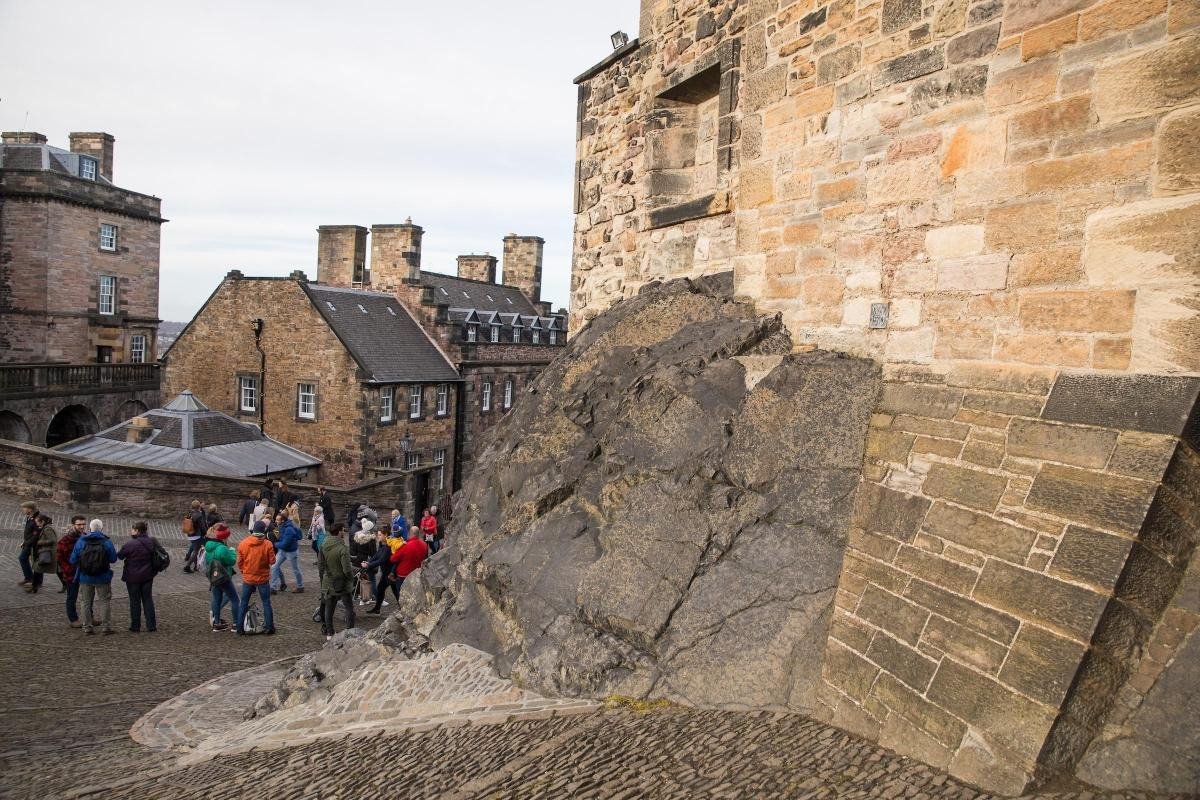

Castle Rock, an ancient volcanic plug, is the rugged foundation upon which Edinburgh's famous castle proudly stands. Formed from an extinct volcano system which erupted 340 million years ago, its dramatic cliffs rise precipitously from the surrounding landscape, offering a formidable natural fortress that has shaped much of the city’s history.
Geology and History
The rock's geological significance is matched by its historical importance. Over the centuries, Castle Rock has witnessed and withstood numerous historical events, from sieges to royal ceremonies. Its steep, rocky façades have made it an enduring symbol of strength and endurance. Visitors are often captivated by the panoramic views of Edinburgh that can be seen from its summit, providing a perfect backdrop for understanding the strategic importance of this site throughout Scotland's history.
For nature enthusiasts and geologists, the structure offers an exposed section where the layers of basalt and dolerite can be clearly seen, showcasing the natural processes that have sculpted this landscape over millennia. This feature not only adds to the scenic quality of the area but also serves as an educational resource that explains much about the Earth's volcanic past.
The preservation efforts around Castle Rock ensure that the area remains a pristine example of Scotland’s rugged terrain, allowing visitors to enjoy and learn from this natural monument without the interference of modern developments. Whether it’s the sweeping vistas, the rich history, or the sheer majesty of the rock itself, Castle Rock remains one of Edinburgh’s most cherished landmarks.