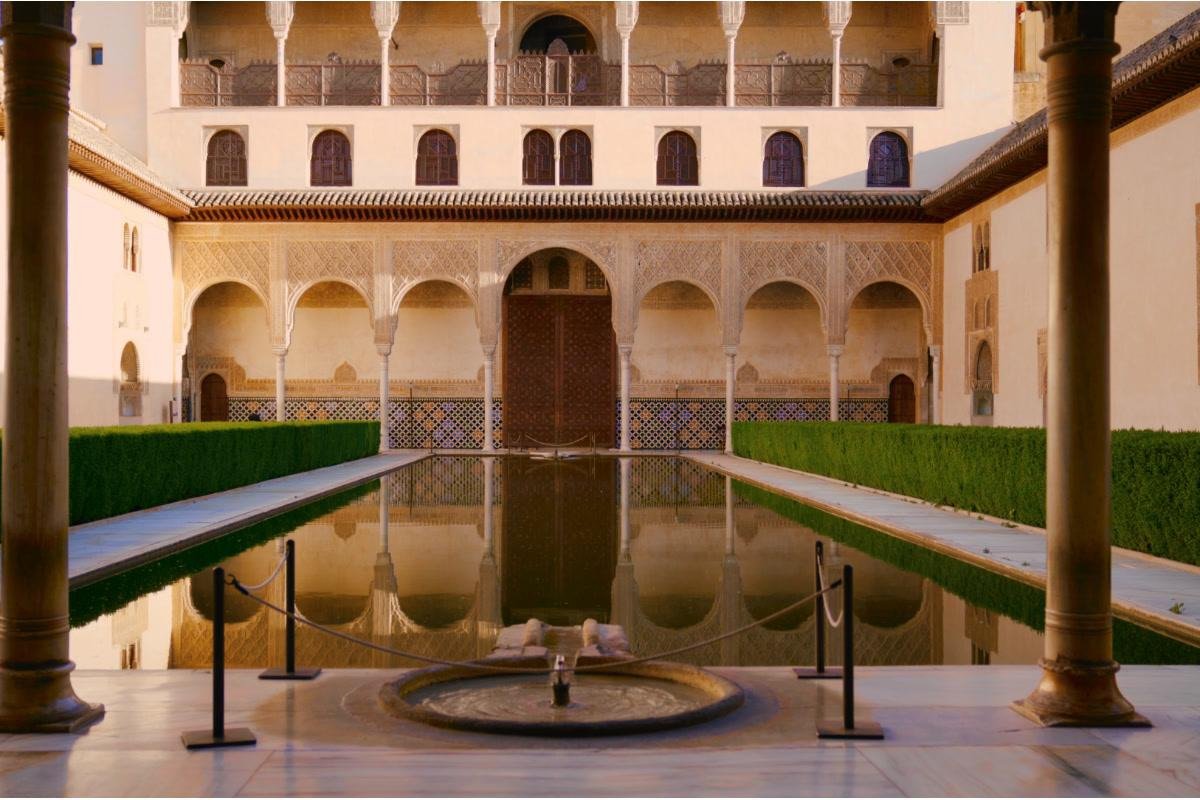

The Nasrid Palaces, a dazzling jewel of Islamic art and architecture, form the heart of the Alhambra complex. This series of royal palaces served as the residence of the Nasrid sultans in the 13th and 14th centuries and remains a profound testament to the sophisticated culture and aesthetics of the last Muslim dynasty on the Iberian Peninsula. Intricate stucco work, arabesque patterns, and finely carved woodwork are hallmarks of this historic site, reflecting the zenith of Islamic artistic expression.
Architectural Splendor
Visitors to the palaces will find themselves wandering through a succession of halls and courtyards, each more elaborate than the last. The Court of the Myrtles with its reflecting pool offers a serene vista, while the Hall of the Ambassadors boasts a majestic cedarwood dome, symbolizing the seven heavens of Islamic cosmology. The famous Patio of the Lions, renowned for its marble fountain supported by twelve lions, serves as an architectural symbol of political power and divine protection.
The meticulous restoration efforts have preserved the vibrant colors and detailed tile work that characterize the palaces' interiors. Each room and courtyard tells a story, not only of the sultans who walked these spaces but of the skilled artisans who crafted every detail with precision and care.
Artistic Legacy
The influence of the Nasrid style extends beyond architecture into the decorative arts, including ceramics, metalwork, and textiles, which can be seen throughout the palaces. This integration of art and architecture creates a cohesive aesthetic experience that captivates all who visit.