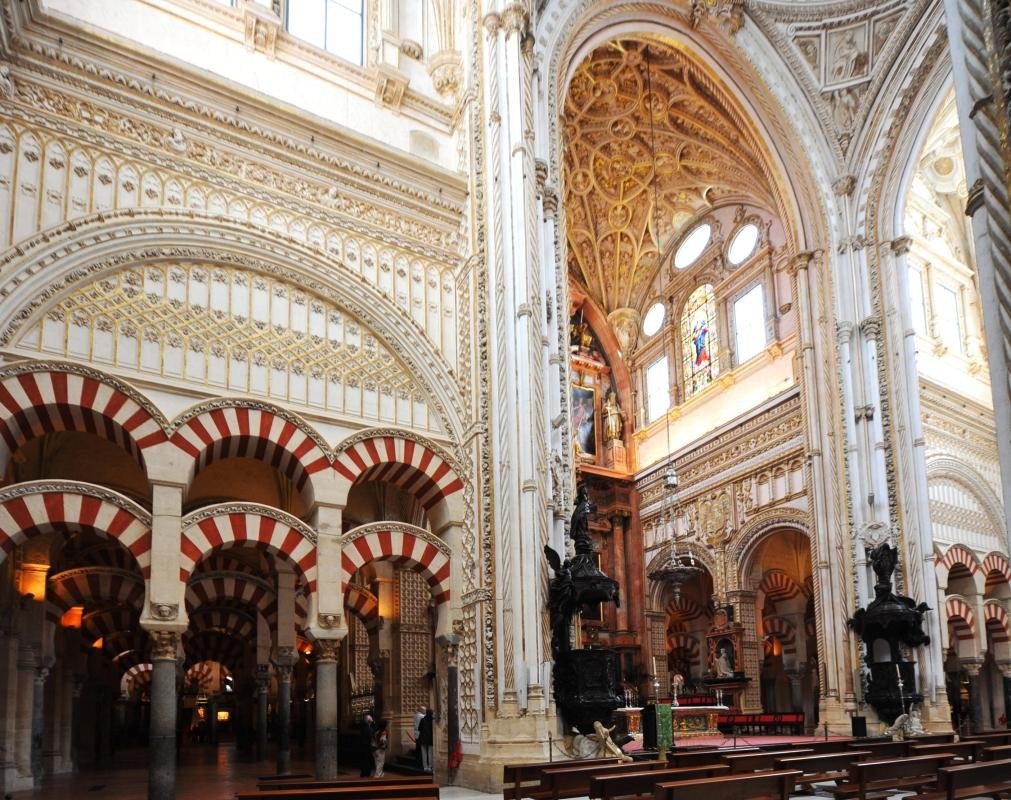

The Mosque-Cathedral Monumental Site of Córdoba, also known as the Mezquita-Catedral, stands as a testament to the layered history of Andalucía. This architectural marvel, originally constructed as a mosque in the 8th century, was converted into a cathedral in the 13th century following the Reconquista. The site uniquely encapsulates the religious and cultural shifts that have shaped Spain over the centuries.
Architectural Fusion
Visitors to the Mosque-Cathedral are often struck by its stunning blend of Islamic and Christian architectural elements. The expansive prayer hall features an iconic forest of columns topped with double arches, a design that creates a striking visual rhythm and enhances the sense of vastness. The mihrab, an ornate niche that traditionally indicates the direction of Mecca, is a masterpiece of Islamic art, featuring intricate mosaics and gold inlay that catch the light in mesmerizing patterns.
Spiritual and Artistic Significance
The later addition of a Renaissance cathedral nave in the heart of the mosque complex may seem jarring to some, yet it offers a fascinating insight into the complex religious history of Spain. This juxtaposition makes the Mosque-Cathedral not only a place of worship but also a canvas displaying the evolution of artistic and architectural styles under different religious influences throughout the ages.