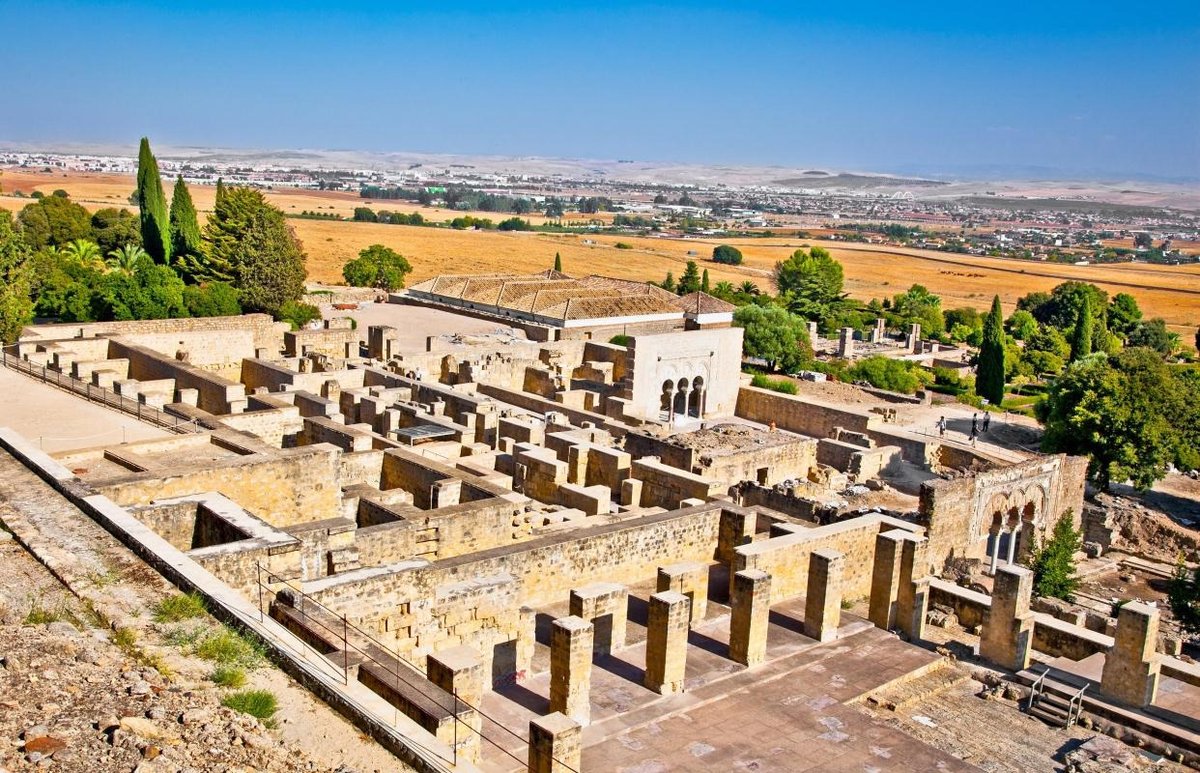

The ruins of Medina Azahara, a sprawling 10th-century palace-city built by the Umayyad Caliph Abd ar-Rahman III, stand as a testament to the grandeur of early Islamic Spain. This archaeological site, located just outside Córdoba, was once a symbol of political power and cultural achievement. The complex was meticulously designed to reflect the Caliphate's might, with its imposing gates, broad avenues, and lush gardens.
Architectural Highlights
Visitors to Medina Azahara can explore the remnants of this once-thriving metropolis, including the richly decorated administrative and government buildings. Among the most fascinating structures is the reception hall, where intricate stucco work and remnants of exquisite tile decoration still evoke the site's past splendor. The hall, designed to awe visitors with its luxury and detailed craftsmanship, served as a key location for diplomatic and ceremonial events.
The on-site museum offers further insights into the life and times of Medina Azahara through its extensive collection of artifacts recovered from the site. These include ornamental elements that adorned the walls, luxury items that filled the palatial rooms, and everyday objects used by those who lived and worked in the city. Each artifact contributes to a deeper understanding of the sophisticated urban life and artistic accomplishments of the Umayyad period in Andalucía.
Exploring the Site
Guided tours are available, providing a comprehensive overview of the site’s historical context and architectural features. For those preferring a self-led visit, information panels throughout the site offer detailed descriptions in multiple languages, ensuring that the history of Medina Azahara is accessible to all. As you walk through the ruins, the layout of the city gradually reveals itself, offering a glimpse into the planning and vision that shaped this monumental project.