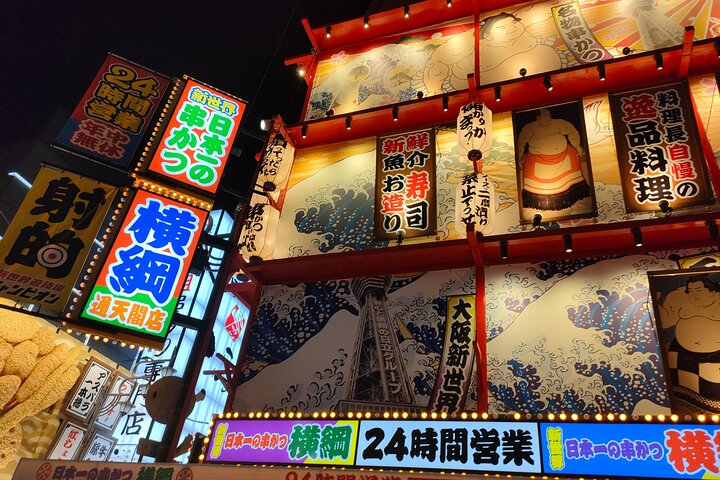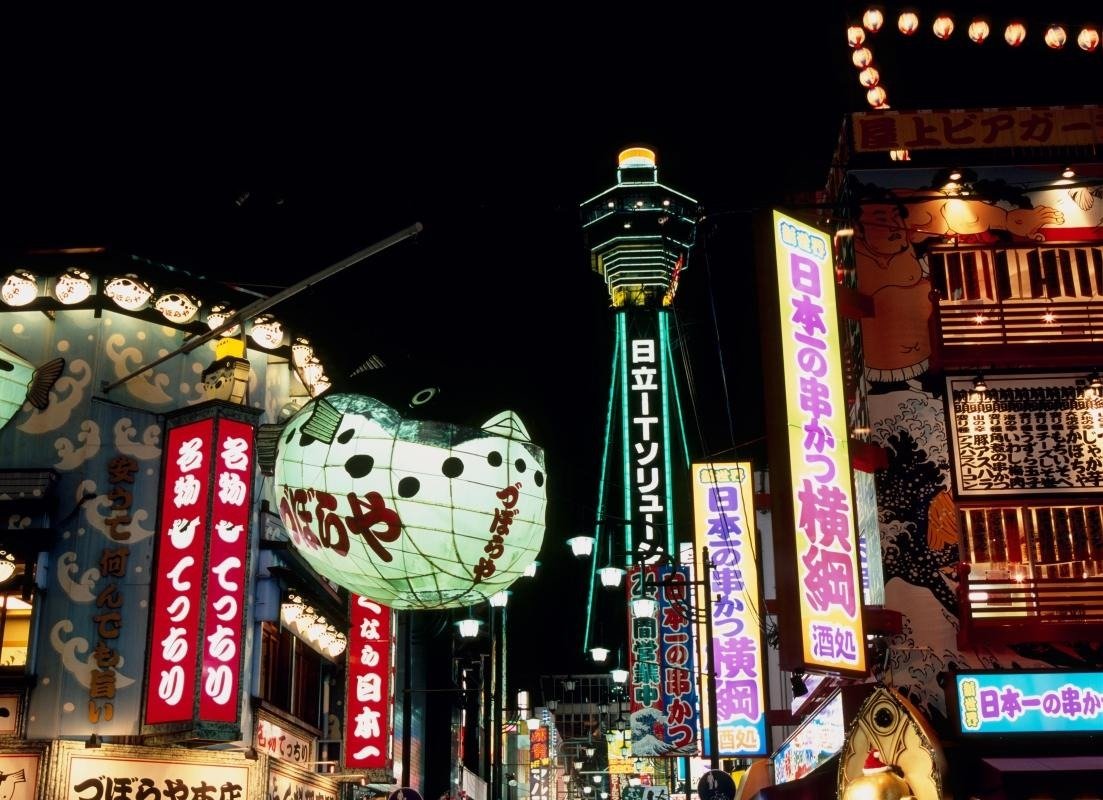

Tsutenkaku, known affectionately as the "Tower Reaching Heaven," is a beloved symbol of Osaka's resilience and modernity. Originally built in 1912 and reconstructed in 1956, this structure stands as a tribute to innovation and historical continuity in one of Japan’s most vibrant cities. Its design was inspired by Paris’s Eiffel Tower and New York's Statue of Liberty, making it a unique fusion of global architectural styles.
Observation Deck
The main attraction of Tsutenkaku is its observation deck, offering panoramic views of Osaka. Visitors can look out over the bustling urban landscape and, on clear days, catch a glimpse of distant mountains. The deck is also home to a statue of Billiken, the God of Happiness, which is said to bestow good fortune on those who rub his feet.
Cultural Significance
Beyond its physical structure, Tsutenkaku holds a deep cultural significance for the people of Osaka. It features prominently in local festivals and is a popular gathering point during celebrations. The tower's lights are specially programmed to commemorate various events and seasons, adding a dynamic element to its steel framework. This ever-changing light display not only illuminates the tower but also symbolizes the city’s energetic spirit and constant evolution.