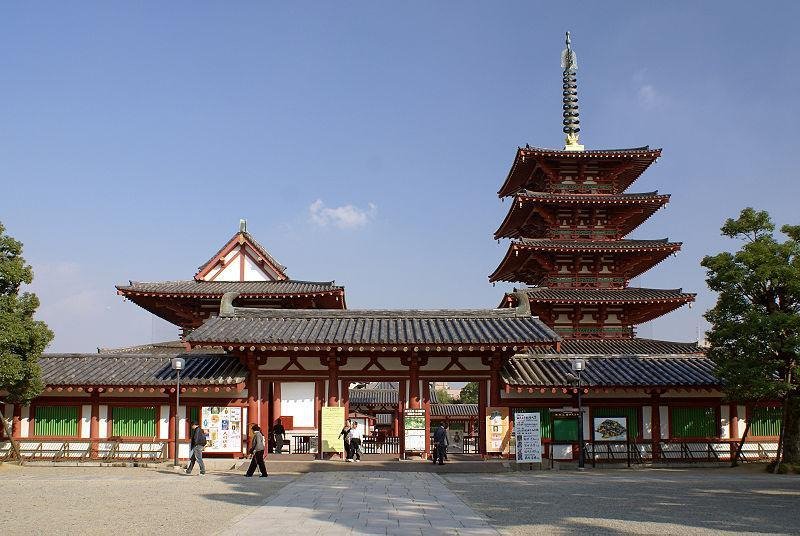

Shitennō-ji, established in 593 AD by Prince Shōtoku, stands as Japan's first Buddhist temple, reflecting centuries of religious devotion and architectural heritage. This historic site captures the essence of spiritual Japan, offering visitors a glimpse into the country's rich cultural tapestry through its well-preserved structures and serene ambiance.
Architectural Splendor
The temple's layout follows a strict Chinese architectural style, with a majestic five-story pagoda that commands the skyline, symbolizing the five elements of the universe. Adjacent to it, the Golden Pavilion (Kondō) houses an exquisite statue of the Cosmic Buddha. Both structures are reconstructed faithfully to maintain their ancient aesthetics, giving a vivid peek into the Asuka period's architectural prowess.
Cultural Significance
Throughout the year, Shitennō-ji hosts various cultural and religious events that highlight its role as a vital center for Buddhist practice. The most notable is the Shitennō-ji Wasso Festival, a vibrant celebration that showcases traditional rites, music, and dance, providing a dynamic way for visitors to experience Buddhist traditions alive in modern Japan.
The temple grounds also include a tranquil garden and a treasure house, which exhibits religious artifacts and scriptures, some of which are designated national treasures. This blend of spiritual and historical exploration makes Shitennō-ji not just a point of interest but a profound journey into the spiritual heart of Japan.