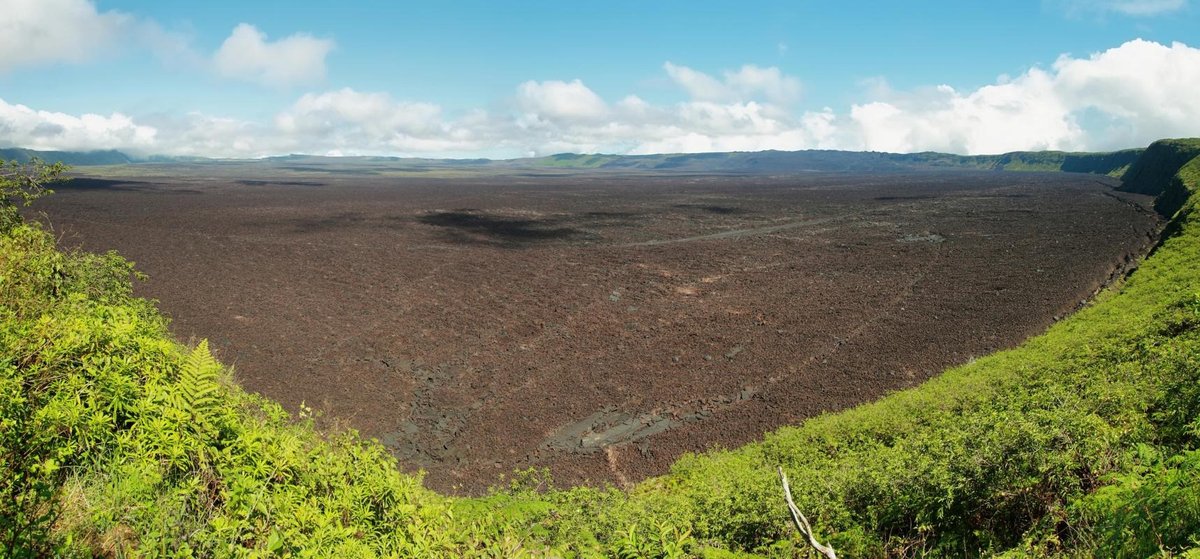

Sierra Negra stands as one of the most captivating volcanoes in the Galapagos Islands, offering awe-inspiring vistas and a rugged landscape ripe for exploration. This natural marvel boasts one of the largest calderas in the world, with a diameter of over 10 kilometers. Hiking enthusiasts will find the trails both challenging and rewarding, presenting opportunities to witness the dramatic contrasts between the lush highlands and the stark, volcanic earth.
Wildlife and Flora
As you traverse the various paths, the air fills with the scents of rare flora that have adapted to the harsh volcanic soil. The region is a sanctuary for a variety of bird species, and it is not uncommon to spot Galapagos hawks and bright vermilion flycatchers flitting about. The landscape is periodically dotted with the vibrant green of scalesia trees, providing a striking juxtaposition against the deep black lava fields.
Geological Features
The geological formations here tell the story of the earth’s inner workings. Fumaroles and lava flows create a mosaic of textures that are both a photographer's dream and a geologist’s playground. The volcano, still active, last erupted in 2005, a testament to the ever-changing nature of this dynamic landscape. Visitors are advised to stay on marked trails, as the terrain can be unpredictable and, at times, hazardous.
Visitor Tips
For those planning a visit, mornings are typically clearer, while afternoons can bring in clouds and mist, shrouding the caldera in mystery. Sturdy hiking boots and plenty of water are essential, as are binoculars for bird watchers hoping to catch a glimpse of the island’s famed avian inhabitants.