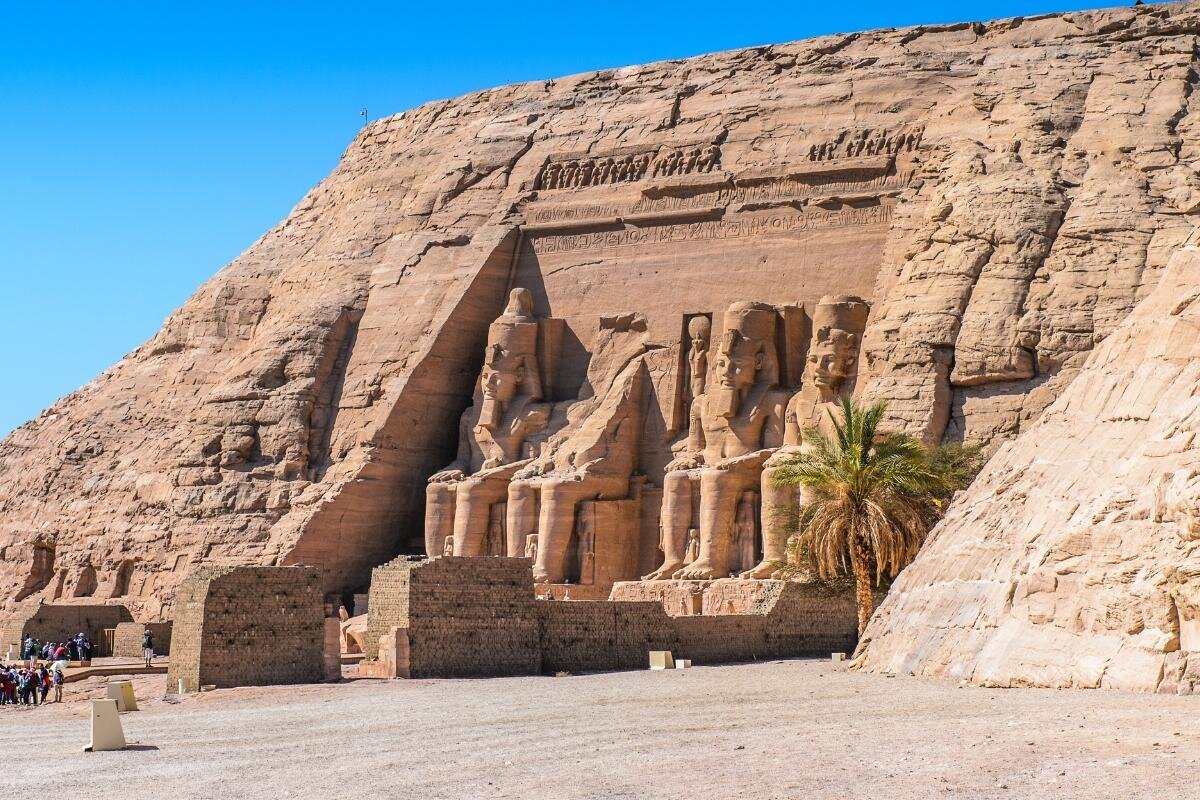

The Abu Simbel Temples are a monumental testament to ancient Egyptian architecture and the enduring legacy of Pharaoh Ramses II. Constructed in the 13th century BC, these massive rock temples stand as one of the most breathtaking sights in Egypt. Originally carved out of a mountainside, they were relocated in the 1960s to prevent submersion under Lake Nasser following the construction of the Aswan High Dam.
Architectural Splendor
The grandeur of Abu Simbel is best witnessed in the Great Temple, dedicated to Ramses II himself, and marked by four colossal statues of the pharaoh at its entrance. Each statue stands about 20 meters high, emphasizing Ramses’ divine status among his people. The temple interior continues to awe visitors with its intricate wall carvings that depict various historical and religious scenes.
Adjacent to the Great Temple is the smaller but equally fascinating Temple of Hathor. Here, the focus shifts to Queen Nefertari, Ramses II’s beloved wife. The temple’s facade is adorned with statues of the queen and the pharaoh, symbolizing their eternal bond and shared divinity.
The site is also notable for the Solar Alignment phenomenon, an ancient astronomical event. Twice a year, on October 22 and February 22, the sun aligns perfectly to illuminate the inner sanctum of the Great Temple, bathing the statues of Ramses, Ra, and Amun in light while leaving the figure of Ptah in darkness. This event attracts scores of tourists and highlights the precision and astronomical knowledge of the ancient Egyptian builders.