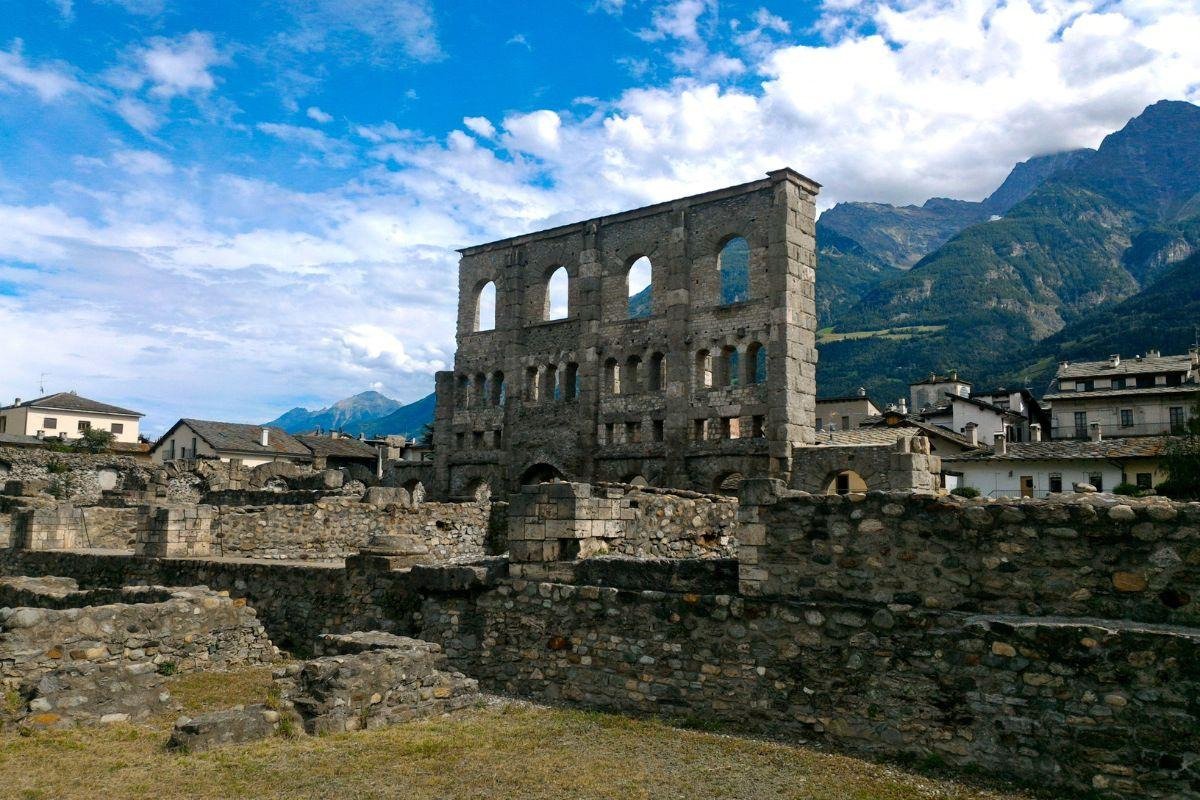

The Roman Theatre of Aosta is a testament to the grand architectural endeavors of ancient Rome, showcasing the cultural prowess that characterized the era. Built in the 1st century BCE, this historical landmark offers a fascinating glimpse into the past, with its well-preserved semicircular façade and remnants of the original marble decorations. Visitors can explore the remnants of the majestic 22-meter-high wall, which once framed the stage, and imagine the spectacles that would have been performed to entertain the Roman citizens of Augusta Praetoria Salassorum, the ancient name of Aosta.
Today, the theatre continues to serve as a venue for various cultural events, blending the historical with the contemporary. The structure's ability to accommodate modern performances while retaining its ancient charm is a rare quality that enchants both historians and art lovers alike. During the summer months, the theatre often hosts concerts and theatrical productions, allowing spectators to enjoy live performances in a truly historic setting.
Preservation and Accessibility
Efforts to preserve the Roman Theatre are evident, with numerous restoration projects having been undertaken to maintain its structural integrity and aesthetic appeal. These initiatives ensure that the theatre remains not only a relic of the past but also a functional part of Aosta's cultural scene. Accessibility has been enhanced to accommodate tourists from around the world, making it a key point of interest in the region.