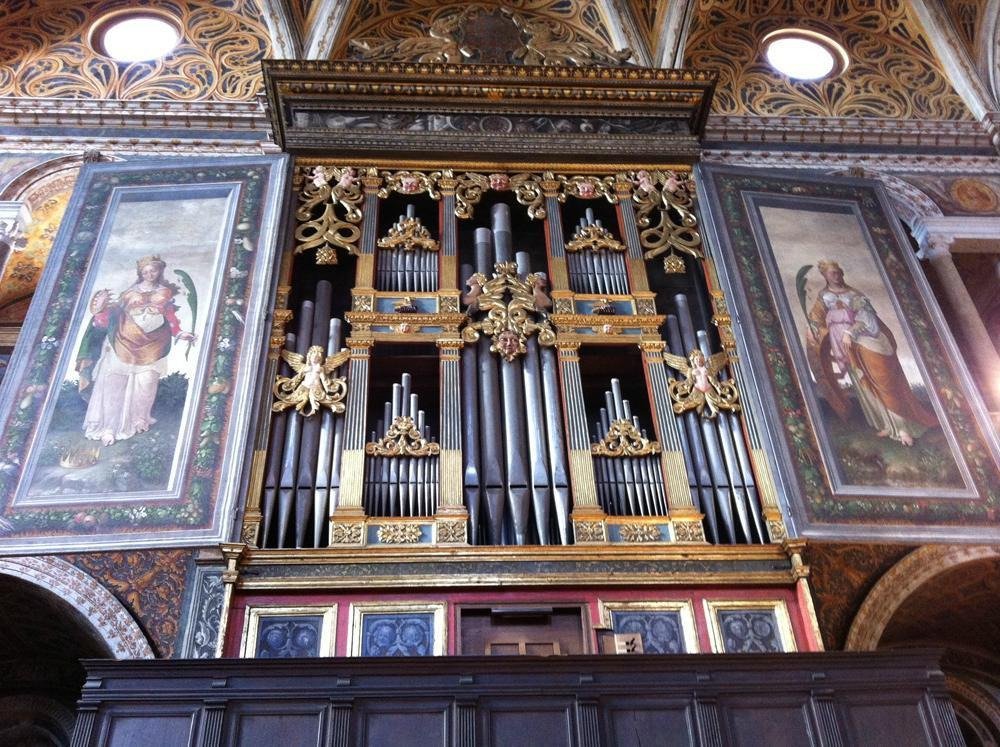

The Chiesa di San Maurizio al Monastero Maggiore in Milan is often referred to as the 'Sistine Chapel of Milan', a testament to its stunning interior adorned with elaborate frescoes. This church, originally attached to the most important female convent of the Benedictines in the city, was built in the 16th century. The artwork inside, a vibrant collection of Renaissance paintings, covers practically every inch of the church’s walls and ceilings, featuring works by Bernardino Luini and his sons.
Artistic Highlights
One of the most captivating aspects of San Maurizio is the division between its two sections: the Hall of the Nuns and the Main Hall. This structure allowed the nuns to attend services without being seen by the public. The Hall of the Nuns is particularly famous for its intricate frescoes that depict scenes from the Old Testament, creating a vivid biblical narrative that encircles the room.
Visitors are often struck by the sheer detail and preservation of the frescoes, which include striking depictions of saints, biblical scenes, and even ornate floral and geometric patterns. The art not only serves as a religious inspiration but also provides insight into the cultural and artistic endeavors of Renaissance Italy. Each fresco tells a story, not just of Christian lore, but of the artistic fervor that swept through Milan during the Renaissance.
Cultural Impact
Today, San Maurizio remains a pivotal cultural landmark in Milan, not just as a place of worship but also as a gallery of Renaissance art. The church hosts regular concerts and events, celebrating both its historical and acoustic richness. It continues to attract scholars, art lovers, and tourists who are eager to experience its artistic and historical offerings.


