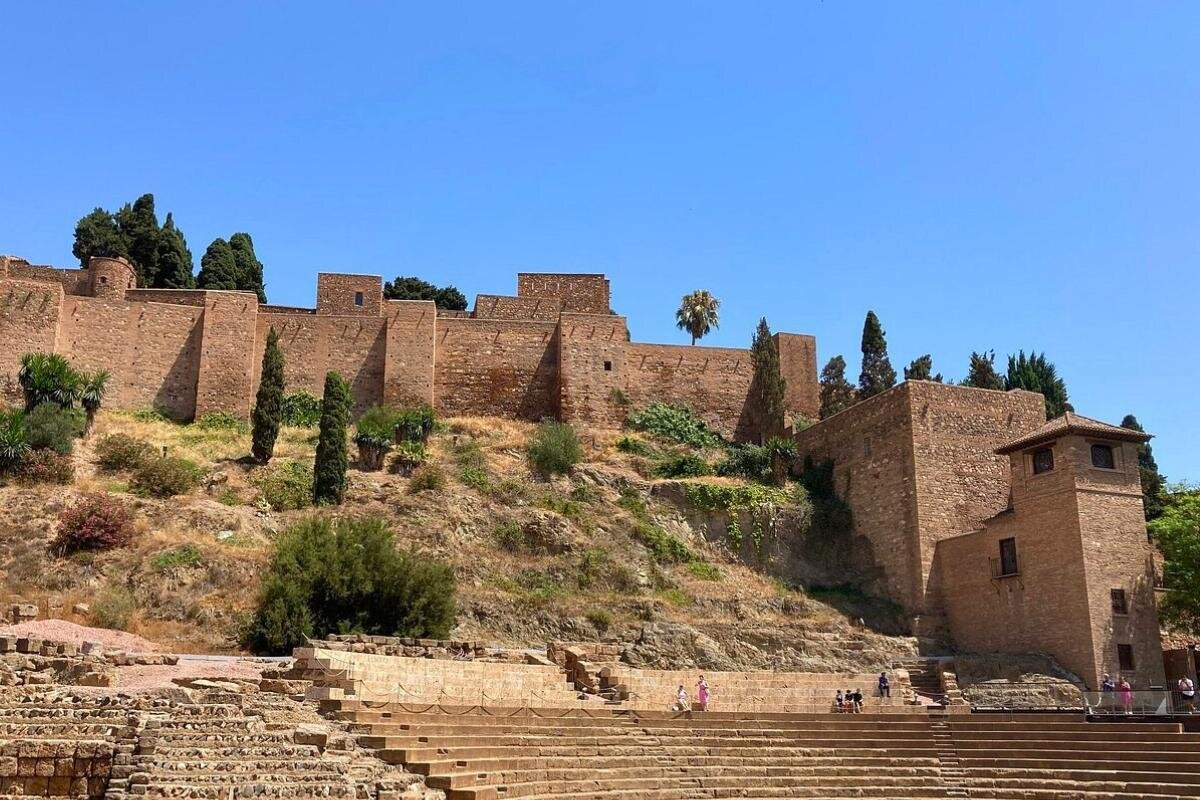

The Alcazaba of Málaga, a palatial fortification, stands as one of the most significant historical landmarks in Andalucía, Spain. Constructed by the Hammudid dynasty in the early 11th century, it was designed primarily for military purposes, showcasing the architectural prowess and strategic acumen of the era. The fortress is renowned for its robust defense mechanisms, including double walls and robust bastions, which played a crucial role in protecting the city.
Architectural Splendor and Historical Significance
The Alcazaba's architecture is a striking blend of Roman and Moorish styles, with remnants of Roman masonry evident in its lower sections, which were repurposed from a nearby Roman theatre. Visitors are often captivated by the intricate stonework and iconic horseshoe arches that adorn the walkways and gates, leading to expansive courtyards and lush gardens. These gardens, filled with vibrant flowers and aromatic herbs, provide a serene oasis that contrasts sharply with the fortress's formidable exterior.
Exploring the Alcazaba
Within its walls, the Alcazaba houses several important structures, including a small archaeological museum that displays artifacts from the Phoenician, Roman, and Moorish periods, offering insights into the rich tapestry of cultures that have influenced Málaga. The palace complex at the heart of the fortress features elegantly decorated rooms and public baths, reflecting the daily life and sophistication of its former inhabitants. The summit of the Alcazaba offers panoramic views of Málaga's historic city center and the Mediterranean coastline, a perfect backdrop for photography enthusiasts and history buffs alike.