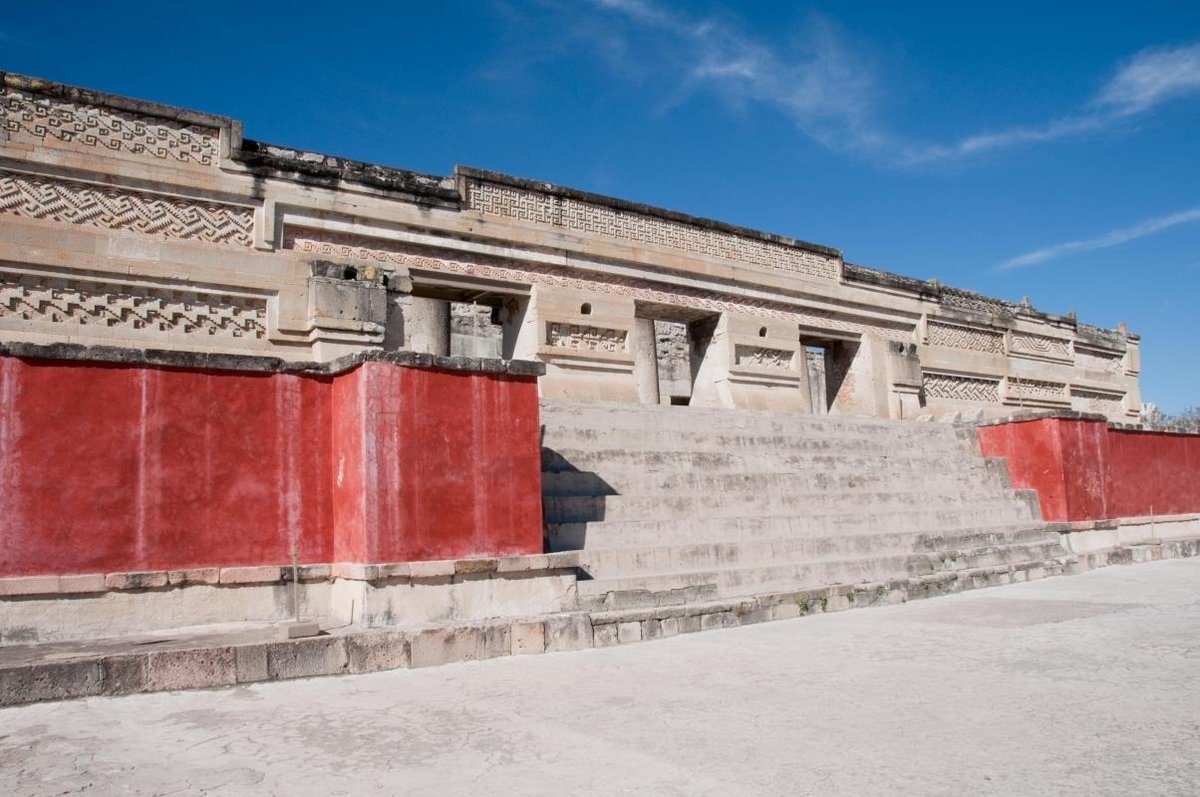

The Zona Arqueológica de Mitla stands as a testament to the engineering and artistic skills of the Zapotec civilization, showcasing some of the most intricate and well-preserved mosaic fretwork in North America. Its ruins are distinguished by the geometric patterns that adorn the buildings, achieved through carefully cut and placed stones without the use of mortar.
Architectural Significance
The site is divided into five main groups of ruins, each characterized by unique structural features such as columned halls, expansive patios, and elaborate tombs. The Group of the Columns, particularly, is famous for its grand hallways and detailed stonework which have survived the ravages of time, providing a fascinating glimpse into the past ceremonial practices of the Zapotecs.
The harmonious blend of architectural design with the spiritual and administrative functions of the site provides a deeper understanding of the ancient Zapotec way of life. Visitors can explore the intricate layouts of each group, which reveal the sophistication of urban planning and religious thought in pre-Columbian Mesoamerica.
Art and Culture
Each stone at Mitla tells a story, reflecting the beliefs, astronomy, and cosmology of the Zapotec people. The site also serves as a cultural bridge between the past and present, offering insights not only into ancient practices but also into contemporary indigenous traditions that have persisted through the centuries.
Exploring this significant archaeological zone offers more than just a walk through ancient ruins; it is an opportunity to connect with the deep historical roots and enduring spirit of Oaxaca.