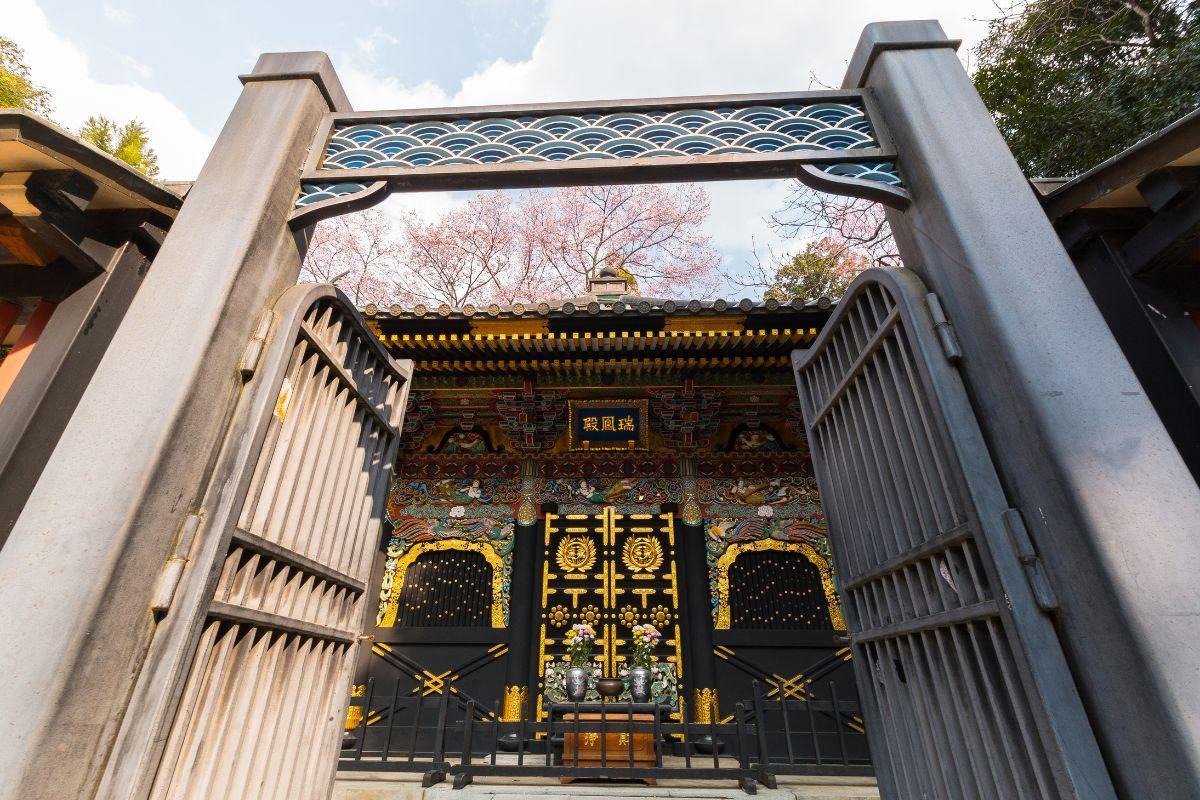

Zuihōden, the mausoleum of Date Masamune, stands as a testament to the opulence and power of one of Japan's most influential feudal lords. Constructed in 1637, this architectural masterpiece is renowned for its ornate woodwork and striking Momoyama-style design, characterized by vivid colors and elaborate carvings that captivate visitors. The mausoleum complex itself is a collection of several buildings, each serving as a resting place for members of the Date clan, making it a significant site for both historical and cultural reflection.
Architectural Highlights
The main hall, resplendent with lacquered interiors and gold leaf decorations, offers a glimpse into the wealth and aesthetic preferences of the Edo period's elite. Intricate dragon carvings seem to guard the site, symbolizing strength and protection. The use of cypress wood in construction adds a subtle yet pervasive scent, enhancing the mystical atmosphere that surrounds this historic site.
Visitors to Zuihōden are also treated to a surrounding environment that complements the solemn beauty of the mausoleum. The approach to the main building is lined with towering cedar trees, providing a serene pathway that prepares one for the tranquility of the mausoleum. Each season casts a different hue over the landscape, with cherry blossoms in spring and fiery maple leaves in autumn enveloping the area in natural beauty.