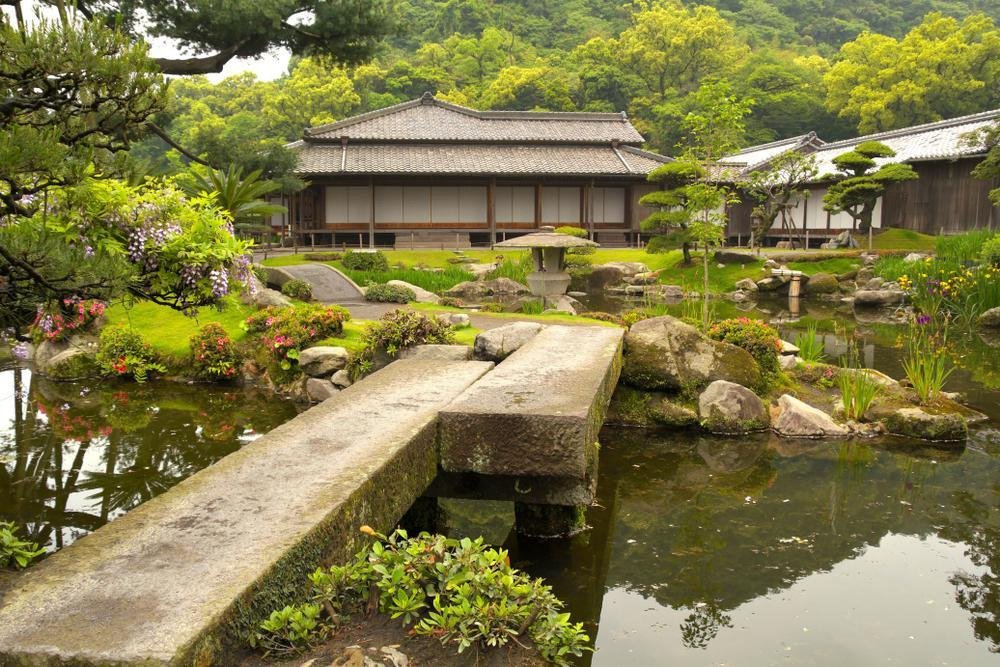

Sengan-en, a historical landmark and garden in Kagoshima, Japan, offers a remarkable glimpse into the rich tapestry of Japanese history and natural beauty. Originally constructed in 1658 by the Shimadzu family, this expansive landscape serves as more than just a garden; it is a museum and a gateway to understanding the cultural heritage of the region.
The garden itself is a masterpiece of Japanese landscape design, featuring the use of borrowed scenery (Shakkei) to incorporate the background elements of active volcano Sakurajima and Kagoshima Bay into its vistas. This integration creates a unique and ever-changing experience where nature and garden blend seamlessly. The diverse plant life and meticulously maintained grounds change with the seasons, offering a fresh beauty with each visit.
Historical Significance
Within the boundaries of Sengan-en, one can explore the historical residence of the Shimadzu clan, which provides an intimate look at the lifestyle and artifacts of one of Japan's most influential families. The house is preserved with great care, displaying artifacts that span hundreds of years, including samurai armor, personal belongings, and art pieces that have been carefully curated to convey the clan's powerful historical narrative.
Adjacent to the historical house, the Shoko Shuseikan Museum, originally a factory established in the 1850s, now serves as a testament to Japan’s industrial advancement during the Meiji Restoration. Exhibits focus on the Shimadzu family’s role in modernizing the country and their early adoption of Western technologies and industrial techniques.
Visitors to Sengan-en can also enjoy traditional Kagoshima cuisine at the on-site restaurants, which offer dishes made with local ingredients and traditional techniques, providing a culinary reflection of the region's heritage. Seasonal events and cultural demonstrations, such as tea ceremonies and samurai performances, further enrich the visitor experience, making Sengan-en a dynamic and educational escape into the past and present of Kagoshima.